
How to Care for Kundan Jewelry
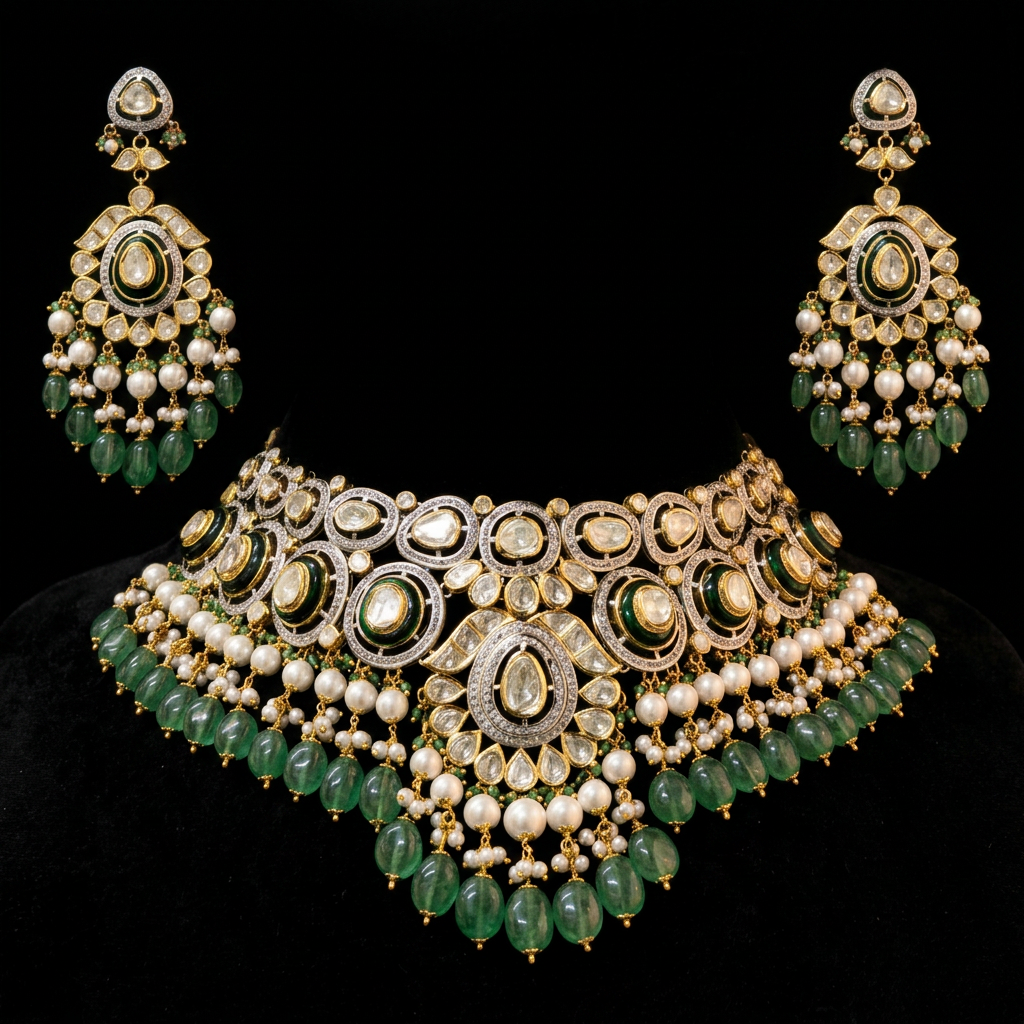
Kundan and Polki pieces are built differently from most modern jewelry, and that difference matters for how you look after them. Understanding why makes the care rules below far easier to actually follow, rather than just a list of dos and don'ts.
Why Kundan and Polki Need Different Care
As covered in what Kundan jewelry actually is, traditional Kundan and Jadau work can use lac — a natural resin — as part of the setting structure that supports the gold foil and stones. Because lac is sensitive to moisture, prolonged exposure to water can compromise traditional settings, gradually loosening stones that were originally pressed firmly into place.
This is true whether a piece is set with genuine diamonds or with glass, since the vulnerability comes from the setting method, not the stone itself. For traditional lac-based settings, moisture is one of the most important things to avoid — though careful handling matters too, since these are still delicate, hand-worked pieces overall.
The Core Rule: Keep Traditional Kundan Settings Dry
For Kundan and Polki jewelry, this is the rule that matters more than any other:
- Never submerge the piece in water.
- Never soak it, even briefly — some general jewelry-cleaning advice recommends soaking methods, but they're specifically unsuitable for lac-based settings and can loosen stones over time.
- Avoid ultrasonic cleaners unless a qualified professional specifically confirms the technique is suitable for that particular piece.
- Clean only with a soft, dry cloth, wiping gently after each wear to remove dust and skin oils.
- Use a soft, dry brush — a clean, soft-bristled makeup or lipstick brush works well — to reach dust in detailed crevices without introducing moisture.
If a piece needs more than a gentle dry wipe — visible tarnish, a stone that feels loose, or dulled enamel — that's a job for a professional, not a home remedy.
Wearing It: A Few Simple Habits
- Jewelry goes on last. Apply perfume, lotion, and hairspray before putting the piece on, not after. These products are a common source of chemical damage to gold foil and enamel work.
- Take it off before water contact. Remove Kundan or Polki pieces before washing your hands, showering, or swimming — the same moisture rule applies even to brief contact.
Storing It Between Wears
- Store pieces separately, in soft cloth pouches or a lined jewelry box, rather than loose in a drawer where they can scratch against other jewelry.
- Keep it dry. A cool, dry place is best; a silica gel packet in the storage box helps absorb ambient humidity, particularly useful during humid seasons or in coastal climates.
- Handle by the edges where possible, rather than pressing directly on stone settings.
When to See a Professional
Kundan and Polki pieces, especially older or heirloom ones, are worth having checked periodically rather than waiting for something to go visibly wrong. A jeweler experienced with traditional settings can re-secure a loosening stone, clean built-up tarnish safely, and catch small issues — a lifted edge of foil, a hairline crack in enamel — before they become bigger ones.
A piece that took weeks of specialised craftsmanship to create deserves equally thoughtful care: a few minutes after each wear, careful storage between occasions, and professional attention whenever something doesn't look or feel right.
Revisit the collection that started this guide: Kundan & Polki Heritage →, or learn how a bespoke piece comes together in The Bespoke Journey →
Common Questions About Kundan
- Can kundan jewelry get wet?
- No — keep it dry. Traditional kundan and polki settings use lac, a natural resin that is sensitive to moisture, and prolonged or repeated water contact can gradually loosen the stones. Remove pieces before washing your hands, showering, or swimming.
- How do I clean kundan jewelry at home?
- Only with a soft, dry cloth, wiped gently after each wear, and a soft dry brush for detailed crevices. Never soak it, and avoid ultrasonic cleaners unless a professional confirms they are safe for that specific piece. Anything more — visible tarnish or a loose stone — is a job for a professional.
- Why is kundan more delicate than modern jewelry?
- Because the vulnerability is in the setting method, not the stone. Stones are pressed into a soft, often lac-based base rather than gripped by prongs, so moisture and rough handling affect it more than a conventional claw setting — whether the stones are diamonds or glass.
- How should I store kundan and polki pieces?
- Store each piece separately in a soft cloth pouch or lined box so they do not scratch one another, keep them somewhere cool and dry, and add a silica-gel packet to absorb humidity — especially useful in humid or coastal climates.
- Does perfume or lotion damage kundan jewelry?
- It can. Perfume, lotion, and hairspray are common sources of damage to gold foil and enamel. Put jewelry on last, after those products have dried, and wipe the piece gently after wearing.
- When should I take a kundan piece to a professional?
- Whenever a stone feels loose, enamel looks dull or cracked, or tarnish builds up — and periodically for older or heirloom pieces, rather than waiting for something to go visibly wrong. A jeweler experienced with traditional settings can re-secure stones and clean safely.