
Bridal Kundan & Polki Jewellery: A Considered Guide
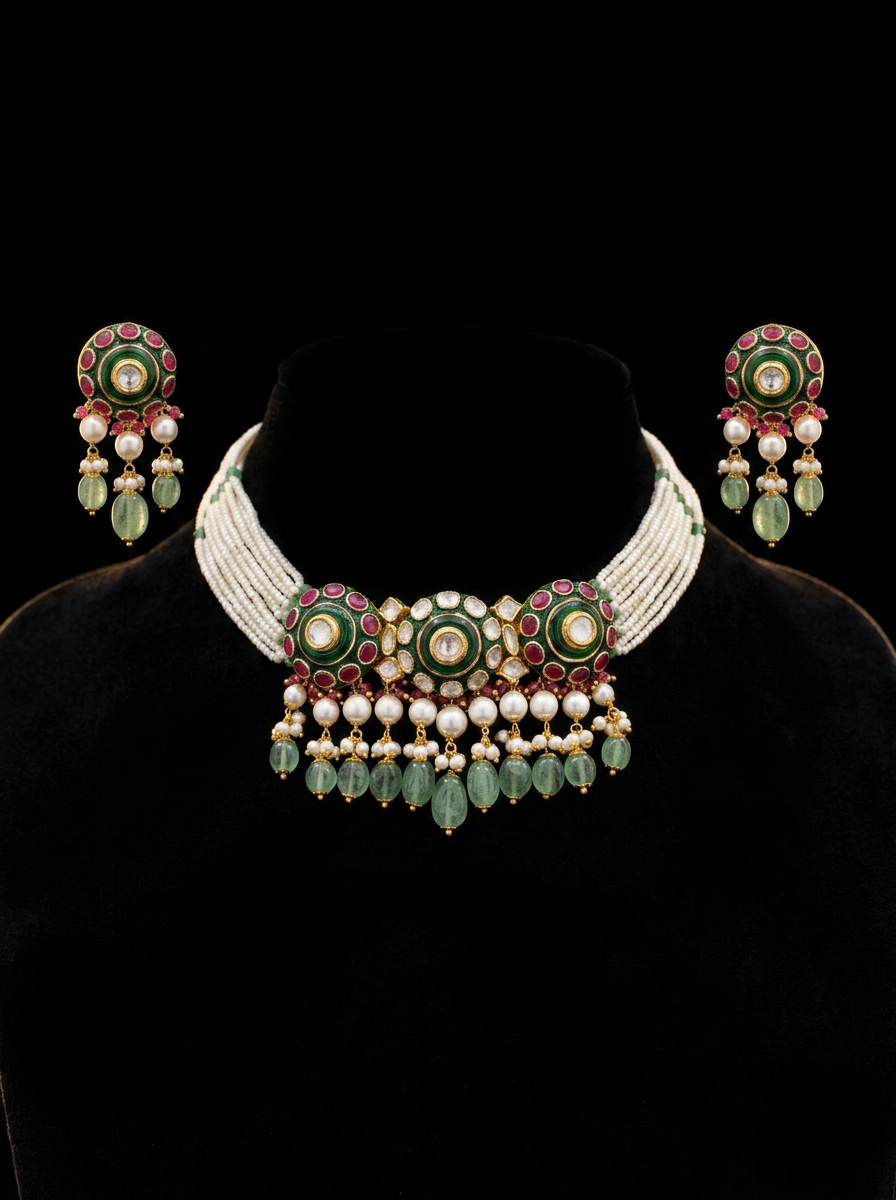
Bridal jewellery is the most considered jewellery most families ever buy — worn on the most photographed day of your life, and often kept for generations after it. Kundan and Polki sit at the heart of that tradition. This is a practical guide to choosing well.
If you are still deciding between the two, start with our guide to Kundan versus Polki. But for a bride, the more useful question is usually how to build a set that works across every wedding event.
Matching Pieces to the Events
An Indian wedding is rarely a single occasion, and bridal jewellery is traditionally chosen with each event in mind:
- The wedding ceremony calls for the centrepiece — an elaborate Polki or Kundan necklace or choker, often built around genuine uncut diamonds, worn with matching earrings and a maang tikka.
- Mehendi and sangeet lend themselves to more colourful, expressive pieces — Kundan-meena work with enamel and coloured stones, lighter and easier to move in.
- The reception often suits a single, more contemporary statement piece worn on its own.
None of this is a fixed rule — it is simply the pattern that has developed around how each style is worn, and there is plenty of room to mix pieces across events.
Building a Bridal Set
A complete bridal set is usually built around a few core pieces that feel like a family — related in stone, gold tone and detail, without being identical:
- A necklace or choker as the centrepiece and anchor of the look.
- Earrings, often chandbali or jhumka style, matched to the necklace.
- A maang tikka or matha patti for the forehead.
- Optional additions — a nath, haath phool or kamarbandh, depending on the tradition and outfit.
This coordination is exactly where a set assembled thoughtfully, or commissioned together, outperforms buying pieces one at a time.
What to Look For
The same principles from our guide to choosing a piece apply, with a few bridal-specific additions:
- Know what the stones are. Ask plainly whether a piece uses genuine uncut diamonds, other gemstones, or glass — the setting alone will not tell you, and for an heirloom it matters enormously.
- Consider the weight you will actually wear. A grand set is worn for many hours; it needs to sit comfortably, not just look right in a fitting.
- Think in generations. A genuine Polki set is often passed down, so provenance and disclosed materials matter more here than for almost any other purchase.
Why Brides Often Choose Bespoke
Ready collections are built for an average taste; a wedding is not an average occasion. If the proportions, the stone choice, or the way a piece complements a specific lehenga matter to you — and for most brides they do — a bespoke commission is built to close that gap. It also lets you build a set that is genuinely coordinated across every event, and, where you wish, to set heirloom stones from your family into something new.
You can see how a piece is made to your own design in The Bespoke Journey, or explore finished commissions in our Kundan & Polki Heritage collection.
Planning your bridal jewellery? Begin your bespoke journey, or message us to start a private consultation — we will help you build a set that suits your events, your outfits, and the years after.
Common Questions About Kundan
- What jewellery does an Indian bride traditionally wear?
- A bridal look is usually built around a centrepiece necklace or choker, matching earrings and a maang tikka, often with additions like a nath, haath phool or kamarbandh. Kundan and Polki pieces are traditional choices, chosen to suit each wedding event.
- Should a bride choose Kundan or Polki?
- It depends on the event and what is in the piece rather than the label. Grand ceremony pieces are often built around genuine uncut diamonds (Polki), while colourful Kundan-meena pieces suit mehendi and sangeet. Many brides use both across their events.
- How far in advance should bridal jewellery be ordered?
- For a bespoke or coordinated set, allow comfortable lead time — an elaborate piece passes through several specialist artisans and can take weeks. Starting a few months ahead leaves room for design, sourcing and fittings without pressure.
- What is included in a bridal jewellery set?
- Typically a centrepiece necklace or choker plus matching earrings and a maang tikka, with optional additions such as a nath, haath phool or kamarbandh. The pieces are chosen to relate to one another in stone, gold tone and detail.
- Is it better to buy bridal jewellery ready-made or bespoke?
- Ready pieces suit an average taste and size; a wedding rarely is average. Bespoke lets you coordinate a full set across events, match a specific outfit, and set heirloom stones into new pieces — which is why many brides commission rather than buy off the shelf.