
How to Choose a Kundan or Polki Piece
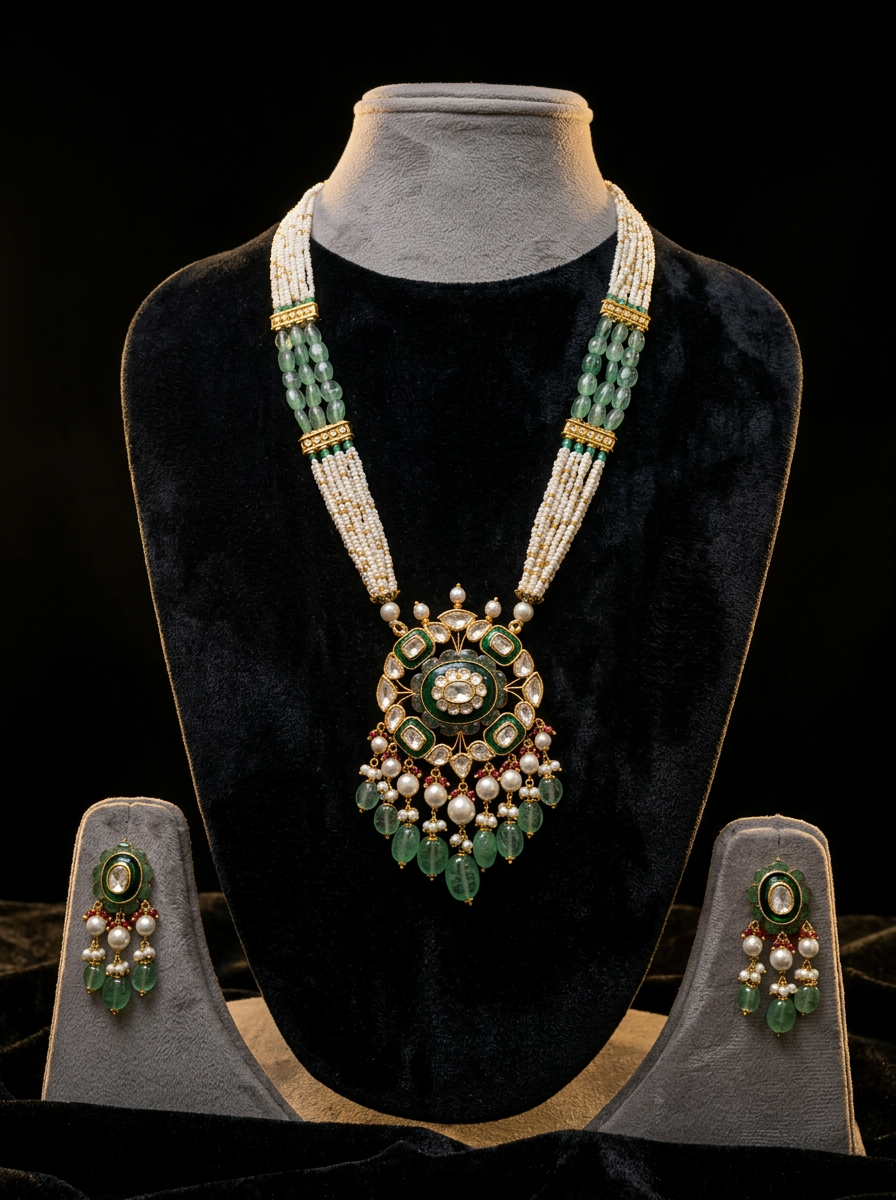
Once you understand the difference between Kundan and Polki, the next question is practical: which one is right for what you actually need it for? The answer depends less on which is "finer" and more on where, how long, and how often you'll be wearing it.
Match the Piece to the Occasion
Indian bridal wardrobes often include jewelry for several distinct events, and pieces are traditionally chosen with each occasion's character in mind:
- Main wedding ceremony. Elaborate Kundan and Polki pieces often take centre stage here — particularly grand necklaces or sets built around genuine uncut diamonds, chosen to complement the scale and formality of the ceremony.
- Pre-wedding functions. Events such as mehendi and sangeet often lend themselves to more colourful, expressive jewelry — including Kundan-meena pieces with enamel, layered gold, and coloured gemstones.
- Festive and everyday occasions. Lighter Kundan pieces, worn on their own rather than as part of a full set, work well for celebrations that don't call for full bridal jewelry.
None of this is a fixed rule — it's simply the pattern that's developed around how each style is typically worn, and there's plenty of room to mix pieces across events based on your own outfits and taste.
Consider Wearability, Not Just Weight
You'll often see it claimed that one style is definitively lighter than the other. In practice, it depends on the individual piece far more than on whether it's labelled Kundan or Polki — a heavily layered Kundan set with dense gold foil work can weigh as much as a Polki piece with fewer, larger stones, and vice versa. What matters more than the general category is:
- How long you'll actually be wearing it. A piece worn for a multi-hour ceremony needs to sit comfortably at the neck and ears for that entire time, not just look right in a fitting.
- Whether it's a full set or a single piece. A complete bridal set (necklace, earrings, maang tikka, and often more) carries meaningfully more weight than a single statement necklace worn on its own.
- Proportions relative to your outfit. A heavily embellished lehenga can visually balance a larger, heavier piece; a simpler outfit often calls for something the jewelry doesn't have to compete with.
If comfort over several hours matters to you, ask to actually try a piece on and move in it — sit, turn your head, raise your arms — rather than judging from how it looks held still.
Think About What You Want the Piece to Mean
Beyond the occasion itself, it's worth asking what role you want the piece to play afterward:
- As an heirloom. If the intent is to pass a piece down, its long-term value and provenance matter more than for something worn once. This is where the distinction from our guide to Kundan vs. Polki becomes genuinely important — know what stones and materials are actually in the piece before treating it as a long-term investment.
- As a considered purchase for one occasion. Not every piece needs to be an heirloom. A beautifully made piece bought for its craftsmanship and how it makes you feel on the day is a legitimate reason on its own.
- As something personal, not off-the-shelf. If nothing in a ready collection fits exactly what you're imagining — the proportions, the stone choice, the occasion it needs to serve — that's precisely the gap a bespoke commission is built to close.
Before You Buy
Whatever you choose, the same principle from our last guide holds: verify what's actually in the piece rather than relying on how it looks or what it's called. Before committing to a Kundan or Polki piece, ask:
- What exactly are the stones? Are they natural diamonds, laboratory-grown diamonds, coloured gemstones, glass, or another material?
- What is the metal and construction? Ask what karat gold is used and, where relevant, how the stones are set.
- What documentation comes with the piece? For diamonds, ask what certification or independent verification is provided, and whether it corresponds to the specific stones being purchased.
- What are you paying for? The price of a traditional piece reflects more than the stones alone — gold, craftsmanship, construction, design, and provenance can all contribute to its value.
A jeweler who can answer all four plainly, in writing, is worth trusting more than one who can't.
Continue reading: How to Care for Kundan Jewelry →
See how a piece comes together, start to finish, in The Bespoke Journey →, or explore our Kundan & Polki Heritage collection →
Common Questions About Kundan
- Should I choose kundan or polki for my wedding?
- For the main ceremony, elaborate polki or kundan pieces built around genuine uncut diamonds often take centre stage. For mehendi and sangeet, more colourful kundan-meena pieces with enamel and coloured stones tend to suit the mood. The right choice depends on the event, your outfit, and how long you will wear it.
- Is kundan or polki jewelry heavier?
- It depends on the individual piece far more than the label. A densely layered kundan set can weigh as much as a polki piece with fewer, larger stones. What matters more is whether it is a full set or a single piece, and how long you will actually be wearing it.
- How do I know a piece will be comfortable to wear?
- Try it on and move in it — sit, turn your head, raise your arms — rather than judging it held still. A piece worn for a multi-hour ceremony needs to sit comfortably the whole time, and a full bridal set carries meaningfully more weight than a single statement piece.
- What should I check before buying a kundan or polki piece?
- Ask four things, in writing: exactly what the stones are (natural diamond, lab-grown, gemstone, or glass); the karat of gold and how the stones are set; what certification accompanies the diamonds; and what you are paying for. A jeweler who answers all four plainly is worth trusting more than one who cannot.
- Is kundan or polki a good heirloom?
- It can be — but only if you know what is actually in it. A piece set with genuine uncut diamonds holds long-term value in a way a glass-set piece does not. If you intend to pass a piece down, provenance and disclosed materials matter more than for something bought for a single occasion.
- When does a bespoke piece make more sense than buying ready-made?
- When nothing in a ready collection fits what you are imagining — the proportions, the stone choice, or the occasion it needs to serve. A bespoke commission is built to close exactly that gap.