
Kundan vs. Polki: What's the Difference?
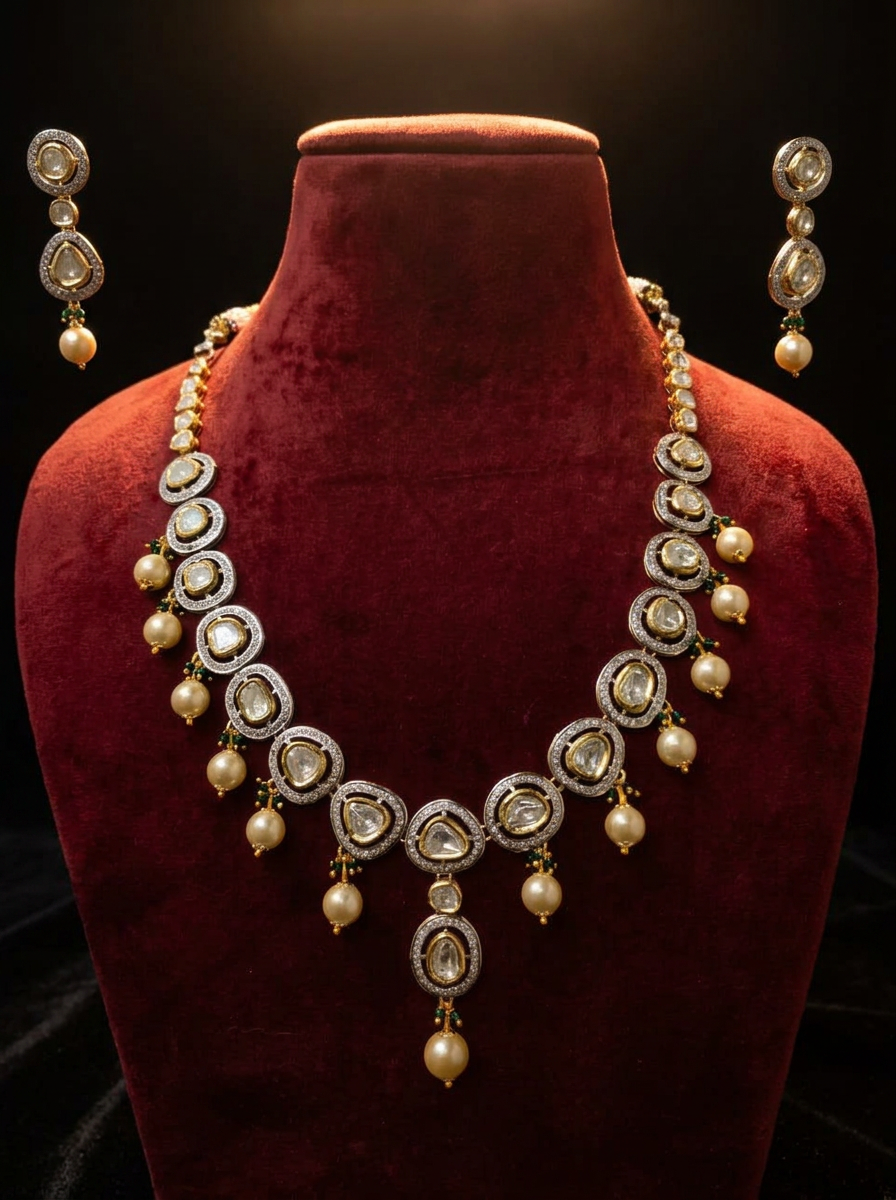
If you've read our guide to what Kundan jewelry actually is, you'll know the short answer: it depends which sense of the word you're using. But when you're standing in front of a piece deciding what to buy, that nuance needs to become something practical. Here's how to actually tell the two apart, and what each distinction means for what you're getting.
The Core Difference
The simplest way to understand the distinction is to separate the setting from the stone.
Kundan refers primarily to a traditional setting technique in which stones are secured using highly refined gold foil, worked around their edges without prongs or claws. GIA's own field research in Jaipur — the historic centre of this craft — describes it exactly this way: Kundan is the setting style; the stones within it can be diamonds or coloured gemstones.
Polki generally refers to flat, uncut diamonds — or diamonds fashioned to retain the appearance of uncut material — most often set in the Kundan style. GIA's research describes Polki plainly as "flat uncut diamonds, or diamonds cut to look flat, set in the Kundan style with 24K gold foil."
This is why the two terms so often appear together: Kundan describes the setting tradition; Polki describes the diamond material within it.
In everyday trade usage, though, the picture gets more specific. Jaipur jewellers also use "Kundan" in some contemporary trade contexts to describe pieces made with machine-cut glass or other imitation materials, sometimes referred to as billor or "synthetic Polki."
So the honest answer is that "Kundan" is used two ways even by people in the trade — as the name of the setting technique itself, and, separately, as shorthand for a glass-set alternative to genuine Polki. The important question when you're buying isn't simply what a piece is called. It's what stones and materials are actually inside it.
Can You Tell Kundan and Polki Apart by Looking?
Sometimes the visual character gives you clues, but appearance alone isn't enough to establish what a stone actually is.
Traditional Polki diamonds often have irregular outlines, flat profiles, and a softer, more dispersed appearance than modern brilliant-cut diamonds. But these characteristics aren't proof of natural origin on their own. GIA's own gemological research has documented both glass-filled polki-cut diamonds and laboratory-grown diamonds fashioned specifically to resemble genuine Polki stones — cases identified only through proper testing, not by eye.
That's why a serious purchase should rest on disclosure and appropriate gemological verification, rather than visual inspection alone.
Why Verification Matters More Here Than for a Cut Diamond
Polki diamonds are often unlike conventional faceted diamonds, for which standard grading reports are commonly issued. Their flat, irregular form can make conventional grading considerations less directly applicable than for a cut stone. For an important purchase, independent gemological identification — and clear disclosure of whether a stone is natural, laboratory-grown, or a simulant — becomes particularly important. It's the same standard we hold every diamond to in our own Diamond Standards.
Which Should You Choose?
This isn't really a question of one being "better" than the other — it depends on what's actually in the piece, not just what it's called.
Kundan jewelry can encompass a range of materials and stones — from coloured gemstones and diamonds to imitation glass in some contemporary commercial pieces. Its value, then, depends not only on the setting technique itself but on the materials, craftsmanship, and disclosure behind the individual piece. A genuine Polki piece, set with real uncut diamonds, sits in a different price and heirloom category from a Kundan piece set with glass — and both can be entirely legitimate purchases, as long as you know which one you're buying.
What matters most is knowing which one you're actually looking at, and buying from someone willing to tell you plainly.
Continue reading: How to Choose a Kundan or Polki Piece →
Explore our Kundan & Polki Heritage collection →, or learn about our approach to certification in Diamond Standards →
Common Questions About Kundan
- What is the difference between kundan and polki?
- Kundan refers to the setting technique — stones held in refined gold foil without prongs or claws. Polki refers to the diamonds themselves: flat, uncut, or minimally cut stones, most often set in the kundan style. In short, kundan is the setting; polki is the stone within it.
- Is polki a real diamond?
- Genuine polki is real, uncut diamond — a stone left in or near its natural rough form rather than faceted. In the trade, though, “kundan” pieces are sometimes set with glass or synthetic stones instead. Because the two can look alike, disclosure and gemological testing matter for any serious purchase.
- Which is more valuable, kundan or polki?
- It depends on what is actually in the piece, not the label. A genuine polki piece set with real uncut diamonds generally sits in a different price and heirloom category than a kundan piece set with glass. Value comes from the stones, gold, craftsmanship, and disclosure — not the name alone.
- Can you tell kundan and polki apart just by looking?
- Not reliably. Polki diamonds often have irregular outlines and a soft, flat appearance, but glass-filled stones and lab-grown diamonds can be fashioned to look the same. GIA has documented cases identified only through proper testing, so appearance alone is not proof.
- Why does polki need gemological verification?
- Polki’s flat, irregular form makes standard diamond grading less directly applicable than for a faceted stone. For an important purchase, independent identification — and clear disclosure of whether a stone is natural, lab-grown, or a simulant — matters more here than for a conventional cut diamond.
- Are kundan and polki the same as jadau?
- Jadau is the broader hand-setting technique both fall under — stones pressed into soft gold without prongs. Kundan and polki describe, respectively, the setting style and the uncut-diamond stones commonly used with it.