
What Is Jadau Jewelry?
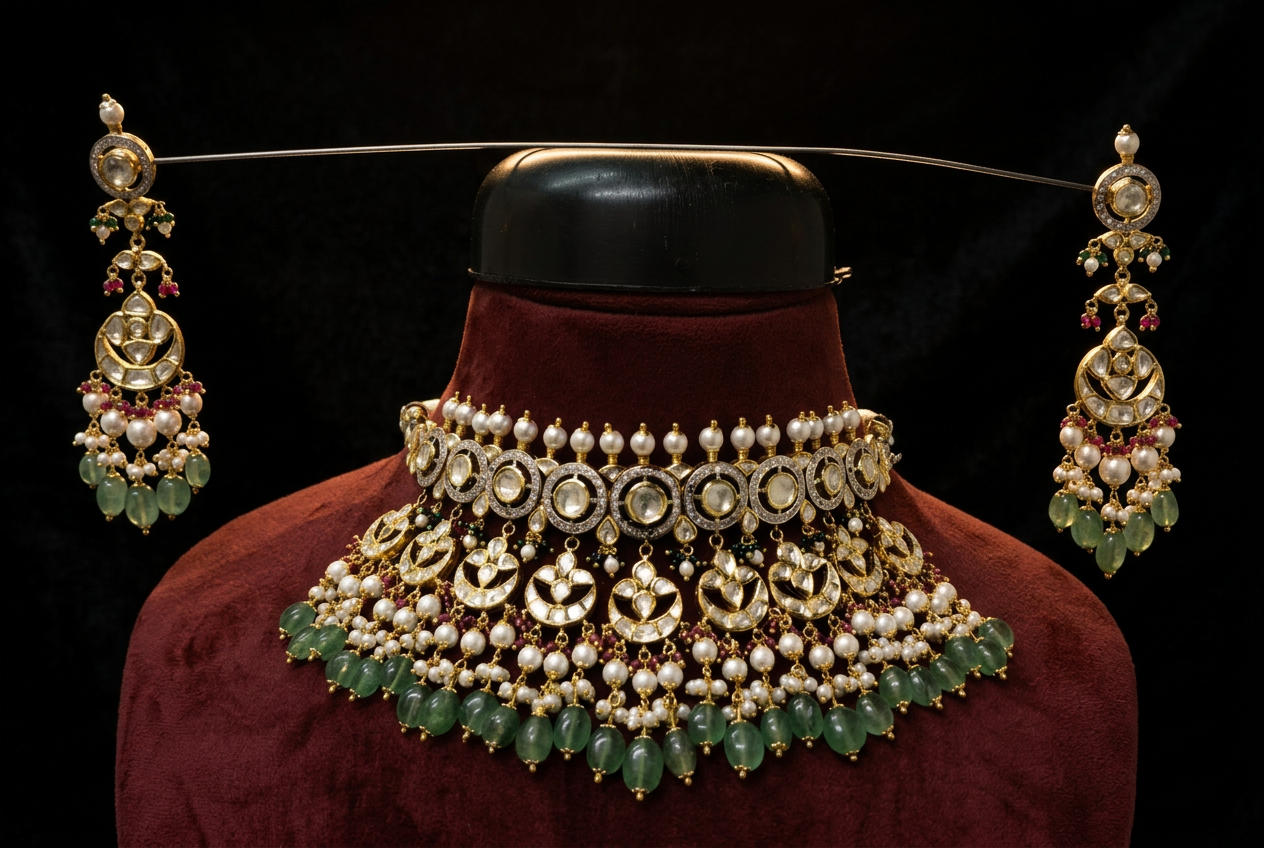
Jadau is the parent craft that both Kundan and Polki belong to — not a stone and not a single technique, but the broader tradition of setting jewelry by hand. The name comes from jad, meaning to embed: in jadau work, stones are pressed into gold and held by the metal itself, without prongs or claws.
If Kundan and Polki are the words you hear most, Jadau is the umbrella they sit under. Understanding that relationship makes the whole family of traditional Indian jewelry far easier to read.
Jadau Is the Craft; Kundan and Polki Are Parts of It
It helps to line the three terms up. Jadau is the setting tradition — the hand method of embedding stones in soft, high-karat gold. Kundan refers to the refined gold foil used to secure each stone within that method. Polki refers to the uncut diamonds so often set this way. One is the craft; one is the setting material; one is the stone.
How a Jadau Piece Is Made
Jadau is not the work of a single artisan. Traditionally it passes through several specialists, each responsible for one stage, and an elaborate piece can take weeks to complete:
- The framework is designed and built in gold first, defining where every stone will sit.
- Engraving and carving shape the metal and prepare its surfaces.
- Meenakari — enamel work — is often applied to the reverse before the stones go in, so the back of the piece is finished as carefully as the front.
- Setting presses the stones into the gold, with fine gold foil burnished around each one to lock it in place without any mechanical grip.
- Stringing and finishing complete the piece.
Because the stones are seated in gold rather than gripped by claws, jadau depends on very high-karat, soft gold — the same reason the kundan setting within it works at all.
Where Jadau Comes From
Jadau is closely associated with the Mughal and Rajput courts, where the craft was refined into one of India's most distinctive jewelry traditions. The workshops of Rajasthan — Jaipur and Bikaner in particular — and centres in Gujarat became renowned for it, and Bikaner is still especially known for fine jadau work today.
Why Jadau Endures
Machine setting is faster and more uniform. What it cannot reproduce is the hand-burnished irregularity of a jadau setting, or the tradition of finishing the hidden reverse with meenakari — beauty built into a piece whether or not anyone sees it. That combination of visible and hidden craft is much of why jadau has survived, largely unchanged in method, for centuries.
What to Check
Because "jadau" describes how a piece is made rather than what is in it, the same questions apply as across the rest of this craft: what exactly are the stones, what karat is the gold, and what disclosure comes with the piece. The method alone does not tell you — the materials and the maker's honesty do.
Continue reading: What Is Kundan Jewelry? →
Explore the enamel work on the reverse in What Is Meenakari? →, or see the craft in our Kundan & Polki Heritage collection →
Common Questions About Kundan
- What is jadau jewelry?
- Jadau is the traditional Indian craft of embedding stones into gold by hand, held by the metal itself rather than by prongs or claws. It is the umbrella tradition that both kundan setting and polki diamonds belong to.
- What is the difference between jadau and kundan?
- Jadau is the broader hand-setting craft; kundan is the refined gold foil used to secure stones within that craft. Kundan work is a form of jadau — the setting material and method inside the wider tradition.
- Is jadau the same as polki?
- No. Jadau is the setting craft; polki is the uncut diamond often set using it. A jadau piece can hold polki diamonds, other gemstones, or imitation stones — the craft describes the method, not the stone.
- Why is jadau so expensive?
- A single piece passes through several specialist artisans and can take weeks, using high-karat gold and often meenakari enamel on the reverse. The cost reflects the gold, the stones, and the sheer hand labour of the method.
- Where does jadau jewelry come from?
- Jadau is associated with the Mughal and Rajput courts and the workshops of Rajasthan — Jaipur and Bikaner especially — and Gujarat. Bikaner remains particularly known for fine jadau work today.
- How long does it take to make a jadau piece?
- An elaborate jadau piece can take several weeks, because the work is divided among specialists — framework, engraving, enamelling, stone setting, and finishing — each completing one stage by hand.