
What Is Meenakari?
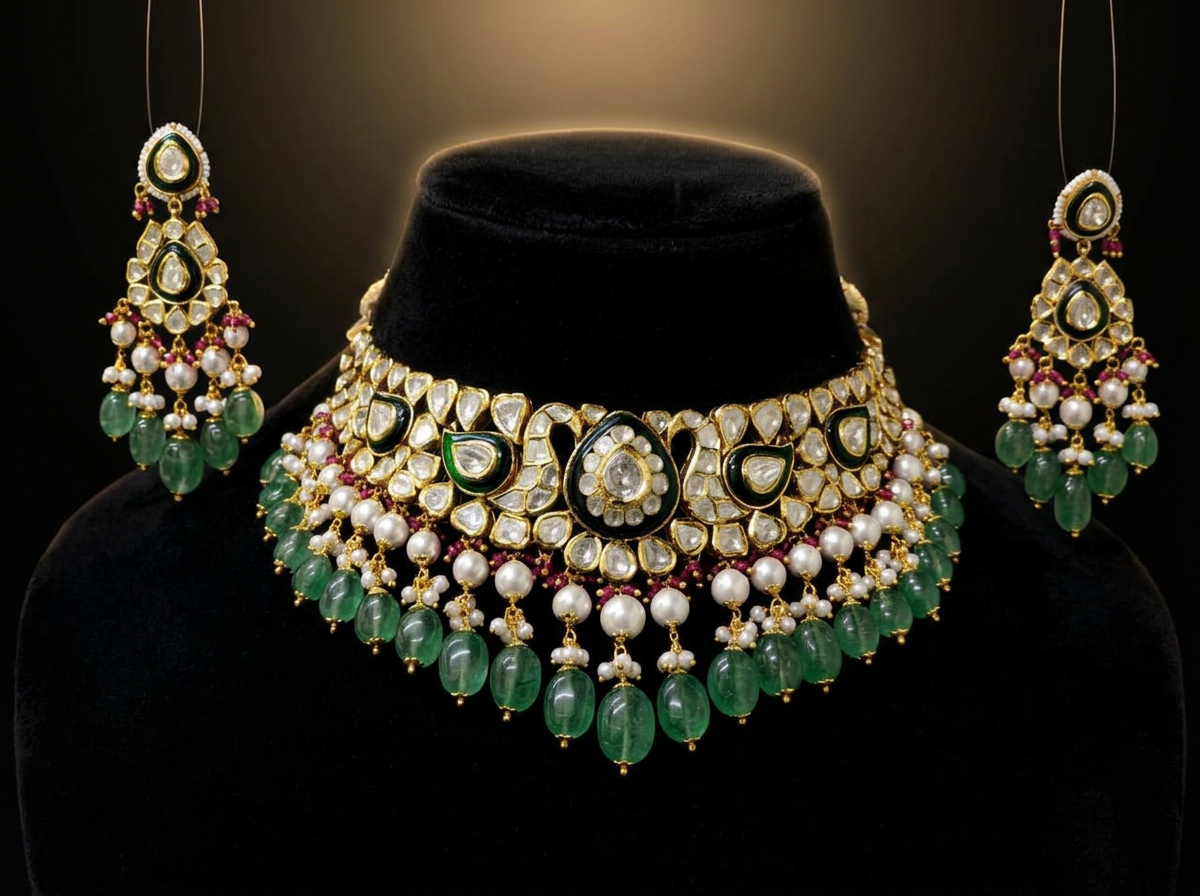
Meenakari is the art of colouring metal — decorating gold or silver with vivid, fired enamel. In traditional Indian jewelry it often appears where you would least expect it: on the back of a bridal piece, so the reverse is as beautiful as the front.
The name comes from mina, the Persian-rooted word for enamel. Where the rest of this craft is about stones and their setting, meenakari is about colour fused permanently into the metal itself.
Enamel, Not Stones
This is the key distinction. Kundan and Polki are about stones and how they are set. Meenakari is about enamel — coloured glass fused to metal by heat. The two are constantly combined: a kundan-meena piece carries kundan or polki work on the front and meenakari on the reverse, which is why so many traditional bridal pieces are decorated on a side no one usually sees.
How Meenakari Is Made
Meenakari is exacting, high-heat handwork:
- Engraving. The artisan first carves fine grooves and cells into the metal surface — the recesses that will hold each colour of enamel.
- Filling. Powdered enamel, coloured with mineral oxides, is laid into the engraved cells one shade at a time.
- Firing. The piece is fired at high heat so the enamel melts and fuses to the metal, turning to a smooth, glassy surface. Different colours can require different temperatures, so they are applied and fired in a considered order.
- Polishing. The finished surface is cleaned and burnished so the colours sit flush and bright.
The Colours and the Centres
Jaipur is the centre most associated with meenakari, and its craftsmen are especially known for rich reds and greens set against gold. The tradition is generally traced to the court of Amber, where it was established under royal patronage in the late sixteenth century, drawing on Persian enamelling technique. Certain colours and styles — the delicate pink gulabi enamel among them — became associated with particular centres over time.
Why the Back of a Piece Matters
The kundan-meena tradition treats the hidden reverse of a piece as worth finishing beautifully in its own right. It is one of the craft's most quietly telling features: a piece with as much detail on the inside as on the outside is, almost by definition, one that someone took real time over.
Caring for Meenakari
Fired enamel is durable but not indestructible — a sharp knock can chip it, and harsh chemicals or heat can dull it. The care is the same gentle discipline as for the settings it accompanies: keep it dry, keep it away from perfume and cleaning agents, store it so it cannot knock against other pieces, and leave repairs to someone experienced with enamel. Our care guide covers this in full.
Continue reading: What Is Jadau? →
See meenakari alongside kundan and polki in our Kundan & Polki Heritage collection →, or learn how to care for these pieces →
Common Questions About Kundan
- What is meenakari?
- Meenakari is the art of enamelling metal — fusing vivid coloured enamel onto gold or silver by high heat. In jewelry it is often applied to the reverse of a piece, so the back is decorated as richly as the front.
- What is the difference between meenakari and kundan?
- Meenakari is enamel work — colour fused to metal. Kundan is a stone-setting technique using gold foil. They are different crafts that are frequently combined in the same piece, kundan on the front and meenakari on the reverse.
- What is kundan meenakari?
- Kundan-meena, or kundan meenakari, describes a piece that combines both crafts: kundan or polki stone-setting on the visible front and meenakari enamel on the reverse. It is a hallmark of traditional bridal jewelry.
- Which city is famous for meenakari?
- Jaipur is the centre most associated with meenakari, particularly its rich red and green enamel on gold. The tradition is generally traced to the court of Amber in the late sixteenth century, drawing on Persian technique.
- How is meenakari made?
- The artisan engraves cells into the metal, fills them with powdered coloured enamel one shade at a time, and fires the piece at high heat so the enamel fuses to a glassy surface — repeating for colours that fire at different temperatures — then polishes it.
- How do I care for meenakari jewelry?
- Treat it gently: fired enamel can chip on impact and dull with chemicals or heat. Keep it dry, away from perfume and cleaning agents, stored so it cannot knock against other pieces, and leave any repair to someone experienced with enamel.