
What Is Polki?
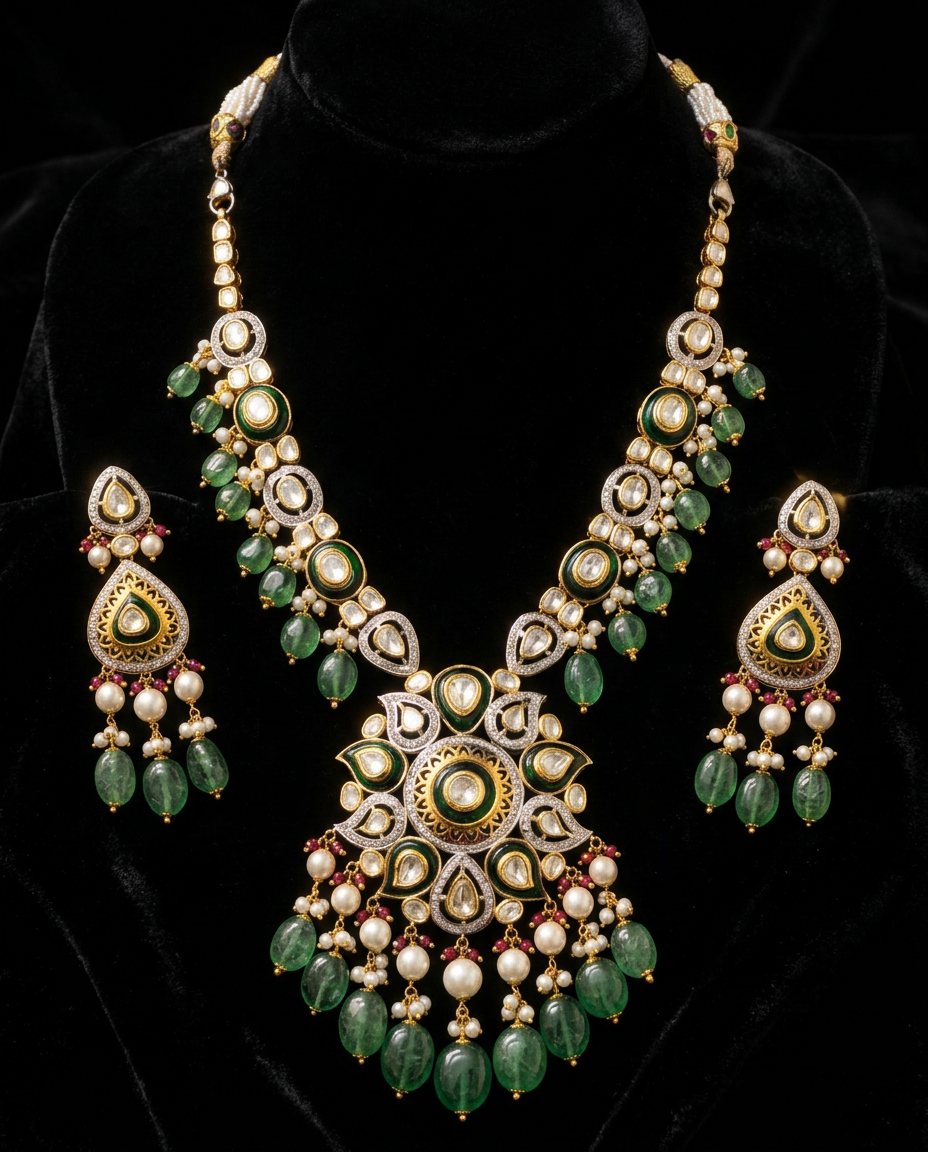
Polki is one of the most misunderstood words in Indian jewelry. It gets used as if it were a setting, a style, or a grade of stone — and it is none of those. Polki refers to the diamond itself: a diamond left uncut, or shaped only enough to keep the flat, natural face of the rough.
That single distinction clears up most of the confusion around the word, so it is worth holding onto: polki is a kind of diamond, not a way of making jewelry.
Polki Is the Stone, Not the Setting
This is where polki is most often confused with Kundan. Kundan describes the setting — stones held in refined gold foil, without prongs. Polki describes the stone that setting so often holds: an uncut diamond. The two words travel together because polki diamonds are traditionally set in the kundan style, but they answer different questions. Kundan is how the piece is made; polki is what is set into it.
How Polki Differs from a Cut Diamond
A modern brilliant-cut diamond is engineered — dozens of precisely angled facets designed to bounce light and produce fire and sparkle. A polki diamond is closer to how diamonds looked before modern cutting existed: minimally worked, keeping a flat, open face rather than a faceted crown.
The result is a different kind of beauty. Where a brilliant sparkles, polki has a softer, glassier, more understated glow. It is not a lesser diamond — it is an older aesthetic, valued precisely for its quiet, uncut character rather than for maximum brilliance.
"Real Polki" and What Is Sometimes Sold as Polki
Here the honest picture matters. Genuine polki is real, uncut diamond. But in the trade, "polki" pieces are sometimes set with other flat, uncut-looking materials — glass, quartz, moissanite, cubic zirconia, or lab-grown diamond fashioned to resemble natural rough.
None of these is necessarily sold dishonestly, but the word "polki" on its own does not tell you which you are looking at. As with Kundan versus Polki, the useful question is never what a piece is called. It is what the stones actually are.
Why Polki Is Hard to Certify
Polki's flat, irregular form makes the standard grading used for faceted diamonds less directly applicable — the familiar cut-and-proportion measures were built for brilliant-cut stones. For an important purchase, the meaningful assurance is identification and disclosure: whether each stone is natural, lab-grown, or a simulant, stated plainly. That is the same standard we apply to every stone in our Diamond Standards.
Where Polki Comes From
Polki predates modern diamond cutting. For much of history, diamonds were set close to their natural form because the technology to cut them into brilliants simply did not exist yet. The tradition became closely associated with the Mughal and Rajput courts, and with the workshops of Rajasthan — Jaipur and Bikaner among them — where it survives as a bridal and heirloom craft today.
Is Polki Worth It?
It depends entirely on what is in the piece, not on the label. A genuine polki piece, set with real uncut diamonds in high-karat gold, sits firmly in the heirloom category — its value drawn from the diamonds, the gold, the hand craftsmanship, and honest disclosure. A glass-set piece can still be beautiful and legitimate, but it belongs to a different category of purchase. Knowing which one you are buying is the whole point.
Continue reading: Kundan vs. Polki: What's the Difference? →
Learn about the craft that holds these stones in What Is Jadau? →, or explore our Kundan & Polki Heritage collection →
Common Questions About Kundan
- What is polki?
- Polki is uncut diamond — a diamond left in, or shaped to keep, its flat natural form rather than cut into a faceted brilliant. It is a kind of stone, not a setting or a style, and it is traditionally set in the kundan style with gold foil.
- Is polki a real diamond?
- Genuine polki is real, uncut diamond. In the trade, however, some pieces sold as polki are set with glass, quartz, moissanite, cubic zirconia, or lab-grown material made to look uncut. The word alone does not tell you which, so ask what the stones actually are.
- What is the difference between polki and a normal diamond?
- A modern diamond is precisely faceted to maximise sparkle and fire. Polki is minimally worked and keeps a flat, open face, giving a softer, glassier glow. It is a different aesthetic — an older, uncut look — rather than a lesser stone.
- Is polki more expensive than regular diamonds?
- It depends on the individual piece. Genuine uncut-diamond polki set in high-karat gold sits in the heirloom category, with value from the diamonds, gold, and craftsmanship. A piece set with glass or simulants is a different category of purchase entirely.
- Can polki be certified?
- Polki's flat, irregular form makes standard faceted-diamond grading less directly applicable. What matters for an important purchase is identification and disclosure — whether each stone is natural, lab-grown, or a simulant — rather than a conventional cut grade.
- Is polki the same as kundan?
- No. Polki is the uncut diamond; kundan is the gold-foil setting technique that holds it. They are frequently combined, which is why the words travel together, but they describe different things — the stone and the setting.